Complete guide
Seawall repair
Almost every seawall that fails does so from the bottom or from behind — not from the part you can see. That single fact decides whether a repair holds for fifteen years or fails again in the same place within three.
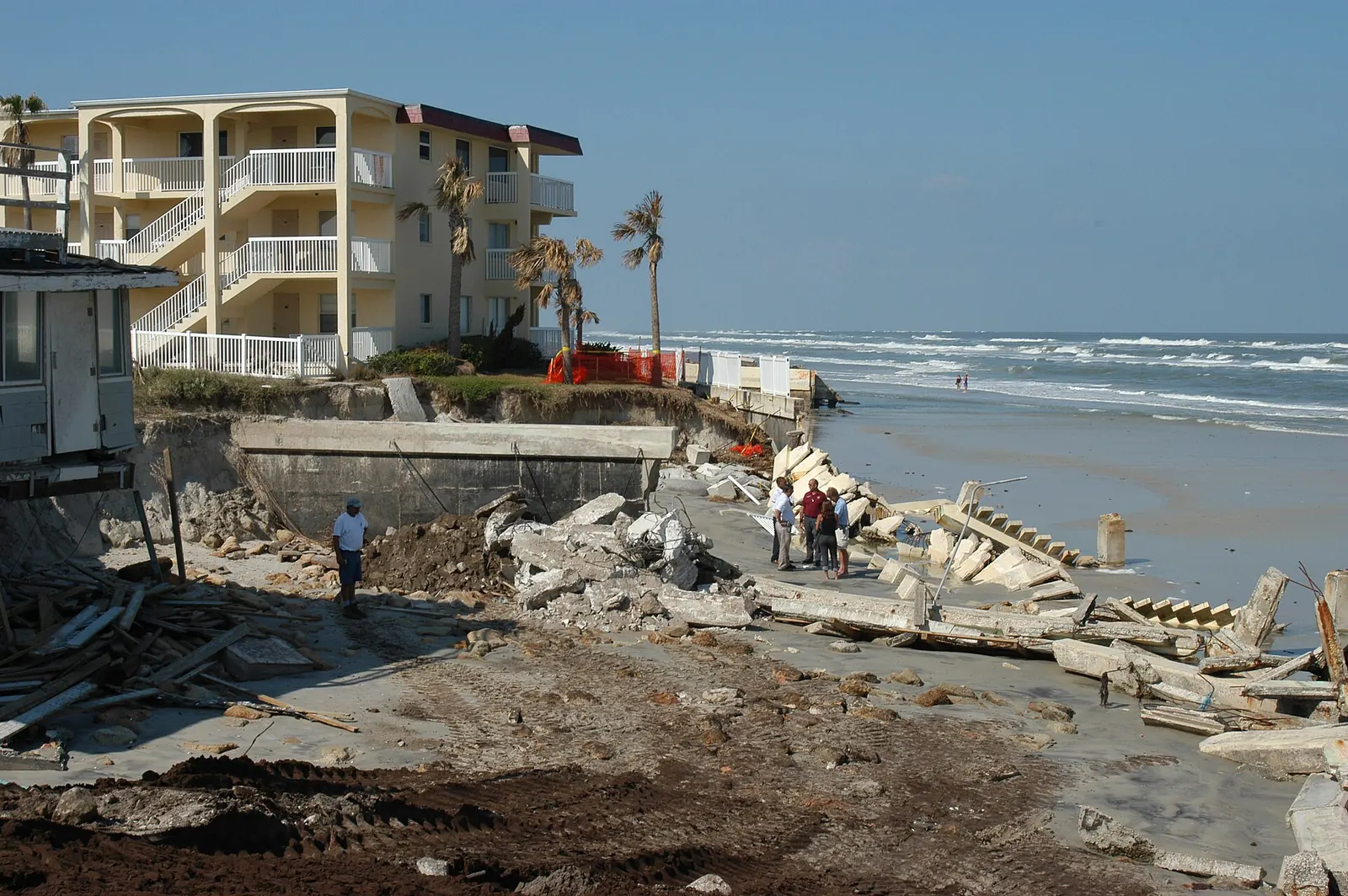
This page covers what actually goes wrong, what each repair involves, and how to tell a real diagnosis from a guess. If you want numbers, the seawall repair cost guide has a calculator and line-item pricing.
If you only read one thing. Cracks are cheap. The void behind the crack is not, and the void is what eventually takes the wall down. Any repair quote written from what is visible above the waterline, without a probe or survey behind the wall, is a guess wearing a number.
The four things that actually fail
Seawalls do not wear out the way roofs do. They fail through one of four mechanisms, and the fix for each is different enough that misdiagnosing it wastes the whole repair budget.
1. Soil escaping through the wall
The most common and most under-recognised. Water moving back and forth through joints carries fine soil with it. Behind the panels a cavity forms and grows. Nothing on the water side looks wrong.
You find out when the lawn develops a soft spot, a paver drops half an inch, or an irrigation line settles. By then the void has usually been there for years. The fix is filling the void — polyurethane injection or cementitious grout — and then closing whatever let the soil out in the first place, which is normally joints or missing filter fabric.
2. Tieback failure — the wall leans
A tieback is a rod running back from the wall into the soil, ending in a buried plate or block. The panels hold the soil face; the tiebacks hold the panels. When anchors corrode or pull, the wall rotates outward at the top while the base stays put.
This is the best news on the list. A lean with sound panels is an anchor problem, and new tiebacks typically run 20 to 30 percent of replacement cost while restoring most of the remaining service life. Contractors normally stabilise in place rather than pulling the wall upright, because forcing it back cracks panels and disturbs backfill. Expect the lean to remain visible.
3. Toe scour — the base gets undermined
Water scours away material at the foot of the wall. The lowest section loses its support, and everything above it follows. This is the failure that repeats: fix the visible damage without addressing the toe and you will be back in three years looking at the same section.
The fix is usually rock placed at the base to break up the energy doing the scouring. If a contractor quotes cosmetic work on a wall with a scoured toe and does not mention it, that tells you something about the quote.
4. Panel and cap damage
Cracked, split or displaced panels, or a concrete cap that has separated from the wall heads. This is genuinely a materials problem rather than a systems one, and it is the point at which repair starts competing with replacement on price. Patching cracked panels is a holding action — worth doing if the rest of the wall has years left, worth questioning if it does not.
What a real diagnosis looks like
The difference between a repair that lasts and one that does not is almost entirely diagnostic, and it happens before anyone quotes a price.
A proper assessment includes probing or ground-penetrating radar behind the wall to find voids, an underwater or low-tide look at the toe, and a check of whether tiebacks are present and at what spacing. It costs $400 to $1,800 and it is the single highest-value thing you can buy in this category, because it determines whether the rest of the money is spent on the right problem.
A contractor who quotes from a walk-along at the top of the wall has not diagnosed anything. That is not necessarily dishonesty — plenty of small operators genuinely work that way — but you are buying their guess, and the failure modes above are specifically the ones that are invisible from up there.
Worth doing yourself, free. Photograph the wall from the same three or four positions once a year, at low water if it is tidal. Seawall failure is slow. A five-year photo series showing a lean progressing or a joint opening is worth more diagnostically than any single inspection, and it is also the evidence an insurer will ask for if you ever claim storm damage.
What each repair involves
| Repair | What happens | Time on site |
|---|---|---|
| Joint and crack sealing | Marine-grade sealant into joints and surface cracks. Preventive rather than structural — closes the path soil escapes through. | 1–3 days |
| Void filling | Polyurethane or grout injected behind the panels to fill the cavity and re-support what sits above it. | 2–4 days |
| Tieback installation | New anchors drilled back into the soil at 6 to 10 foot centers, connected to a whaler across the wall face. | 3 days–2 weeks |
| Toe protection | Rock placed at the base to stop scour undermining the structure. | 2–5 days |
| Cap repair or replacement | Concrete cap rebuilt across the panel heads, which is what ties them together structurally. | 3 days–2 weeks |
| Panel replacement | Sections of sheet pile cut out and replaced. Approaching new-wall work in method and price. | 2–4 weeks |
Permitting sits ahead of most of this. Cosmetic work above the waterline usually needs nothing. Structural repair, anything below the waterline, and anything placing material in the water usually needs authorisation — commonly two to six months, which is longer than the work itself. In-kind repair within the existing footprint is the fastest path through it.
Seawall erosion repair and restoration
Erosion at a seawall shows up in two places: at the toe, where water scours the base, and behind the wall, where soil washes out through open joints and leaves voids and a sinking lawn. Seawall erosion repair addresses both ends. At the toe it is rock — riprap placed against the base to break the energy that is doing the scouring. Behind the wall it is sealing the joints and filling the voids, usually with a flowable grout or polyurethane foam.
Seawall restoration is the trade’s word for doing all of that at once on a wall whose panels are still sound: joints, voids, cap, tiebacks and toe in one mobilisation. It costs a fraction of replacement and, done properly, resets the clock by a decade or more. The seawall repair cost guide prices each of those items separately.
When repair stops being worth it
The practical crossover is around half of replacement cost. Below that, repair. Above it, you are spending replacement money on a structure that keeps the age and failure history of the old one.
Two things push a decision either way. A wall with sound panels and failed anchors is worth repairing almost regardless of price, because tiebacks buy back most of the service life cheaply. A wall with toe undermining across multiple sections is usually replacement territory even if each individual repair looks affordable, because you are patching a structure whose foundation is going.
Ask any contractor quoting the upper end of repair to price replacement alongside it. A good marine contractor does this unprompted. If yours resists, that is information.
Seawall repair near me: choosing a contractor
Marine work is a specialist trade. A general contractor with an excavator is not the same as a marine contractor with a barge, a vibratory hammer and a working relationship with the permitting agency.
- Ask what diagnostic they ran before writing the quote, and what it found. This separates a diagnosis from an estimate faster than anything else.
- Ask them to state the warranted life of the repair in years. A contractor unwilling to name a number is telling you what they expect.
- Ask who pulls the permits and whether the fee is in the price. It is the most common gap between two bids that otherwise look identical.
- Ask whether the toe is being addressed, and if not, why not.
- Ask what gets restored — backfill, sod, irrigation, pavers. Routinely excluded and routinely assumed.
- Check they are licensed for marine or specialty work in your jurisdiction, not just generally licensed.
Seawall repair cost
Calculator and line-item pricing by damage type, plus the repair-versus-replace maths in detail.
Seawall replacement cost
What a full replacement runs per linear foot by material, if repair has stopped making sense.
Riprap and toe protection
Rock at the base is often the actual fix. What it costs and how it is specified.
Seawalls, bulkheads and riprap
Choosing between structure types, and the permit path in full.
Get quotes from seawall repair contractors near you
Up to three local marine contractors, no cost. Worth doing as a sanity check — and worth asking each what diagnostic they would run before quoting.
Common questions
How do I know if my seawall needs repair?
The reliable early signs are behind the wall, not on it: depressions or soft spots in the lawn near the wall, pavers or a patio settling unevenly, soil visibly escaping through joints after rain, or a section that has begun leaning while the panels themselves look intact. Cracks and surface spalling look alarming and are often the least urgent thing. A wall that is losing soil is failing even when it looks fine.
Can a leaning seawall be fixed without replacing it?
Usually yes, if the panels are sound. A lean with intact panels is almost always a tieback failure, and installing new anchors typically costs 20 to 30 percent of replacement while restoring most of the remaining service life. Contractors generally stabilise the wall in place rather than forcing it upright, because pulling a leaning wall back to vertical can crack panels and disturb backfill.
How long does seawall repair take?
Sealing and patching is one to three days. Void filling behind the wall is two to four. Tieback installation on a typical residential run is three days to two weeks depending on anchor count and access. Panel replacement runs two to four weeks and needs the same permitting lead time as new construction, which is commonly two to six months.
When should I replace instead of repair?
The usable crossover is around half of replacement cost. Below that, repair. Above it you are spending replacement money on a structure that keeps the age and failure history of the old one. The exception worth knowing is a wall with sound panels and failed anchors, where new tiebacks are the best value available in this trade.
Do I need a permit for seawall repair?
It depends on scope. Cosmetic sealing above the waterline usually does not. Structural repair, anything below the waterline, and anything that places material in the water usually does. In-kind repair within the existing footprint is the easiest path; the moment work changes the wall's position or dimensions it is treated much more like new construction.
What causes sinkholes in the lawn near a seawall?
Soil escaping through the wall, usually through failed joints, a cracked panel, or filter fabric that is missing or torn. The lawn depression is a late symptom of a void that has been growing for a while. It is a structural warning rather than a landscaping problem, and it does not stop on its own.
Does homeowners insurance cover seawall repair?
Generally not. Standard policies exclude gradual deterioration, earth movement and flood, which between them account for nearly every reason a seawall fails. Some carriers will cover sudden collapse from a named storm if the wall was demonstrably sound beforehand, which is a good argument for keeping dated inspection photographs year to year.