Independent resource
Rain that lands on your roof
doesn’t have to leave your property.
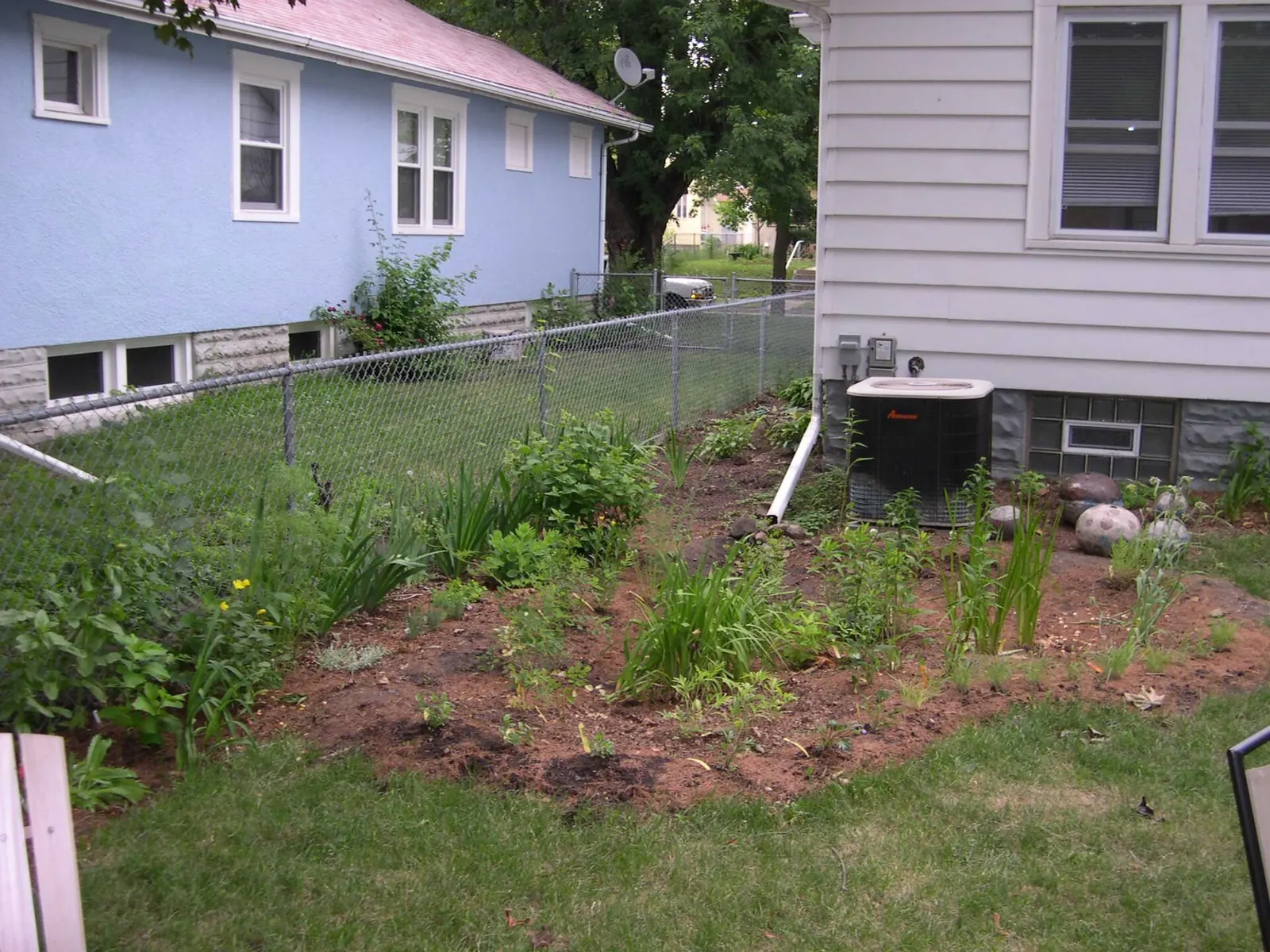
A rain garden is a shallow, planted depression that catches roof and driveway runoff and lets it soak into the ground instead of running to the storm drain. Done right, it handles a one-inch storm from an average roof and needs almost no maintenance after the second year.
Rain garden guides
Sizing, soil testing, plant selection, cost, and maintenance — the full build sequence.
Runoff calculator
Enter a catchment area and soil type. Get the runoff volume and the rain garden size that handles it.
French drains
Yard, foundation and basement — the same trench at three depths, and what each one costs.
Seawalls and riprap
Holding a shoreline in place: walls, bulkheads, rock revetment and living shorelines, with costs and the permit path.
Cost guides
Seawall cost
Per linear foot by material, with a calculator.
Seawall repair
What fails, what each repair involves, and when to replace instead.
Seawall repair cost
Tiebacks, void filling, cap and panel work, priced by damage type.
Seawall inspection
What it covers, what it costs, and when you need one.
Bulkhead cost
Replacement price per foot for calm-water lots.
Riprap cost
Rock by the ton and by the foot of shoreline.
French drain cost
Yard, foundation and basement drainage, priced per foot.
Why runoff is the whole problem
An ordinary 1,500 sq ft roof sheds roughly 900 gallons in a single inch of rain. On undeveloped ground that water soaks in slowly and recharges the water table. On a roof and a driveway it arrives at the creek within minutes, carrying oil, brake dust, and lawn chemicals with it, and it arrives with enough force to scour the gravel beds that salmon spawn in.
Slowing that water down at the parcel scale is the cheapest available fix. It is also the only one a homeowner can do alone.
Start with the calculator. Almost every rain garden that fails was built the wrong size for its catchment. Size yours first, then dig.