Complete guide
Seawalls, bulkheads and riprap
Four ways to hold a shoreline in place, running from a vertical wall driven into the mud to a planted bank with no structure at all. They cost very different amounts, they fail in very different ways, and the one a permit reviewer will approve quickly is often not the one you had in mind.
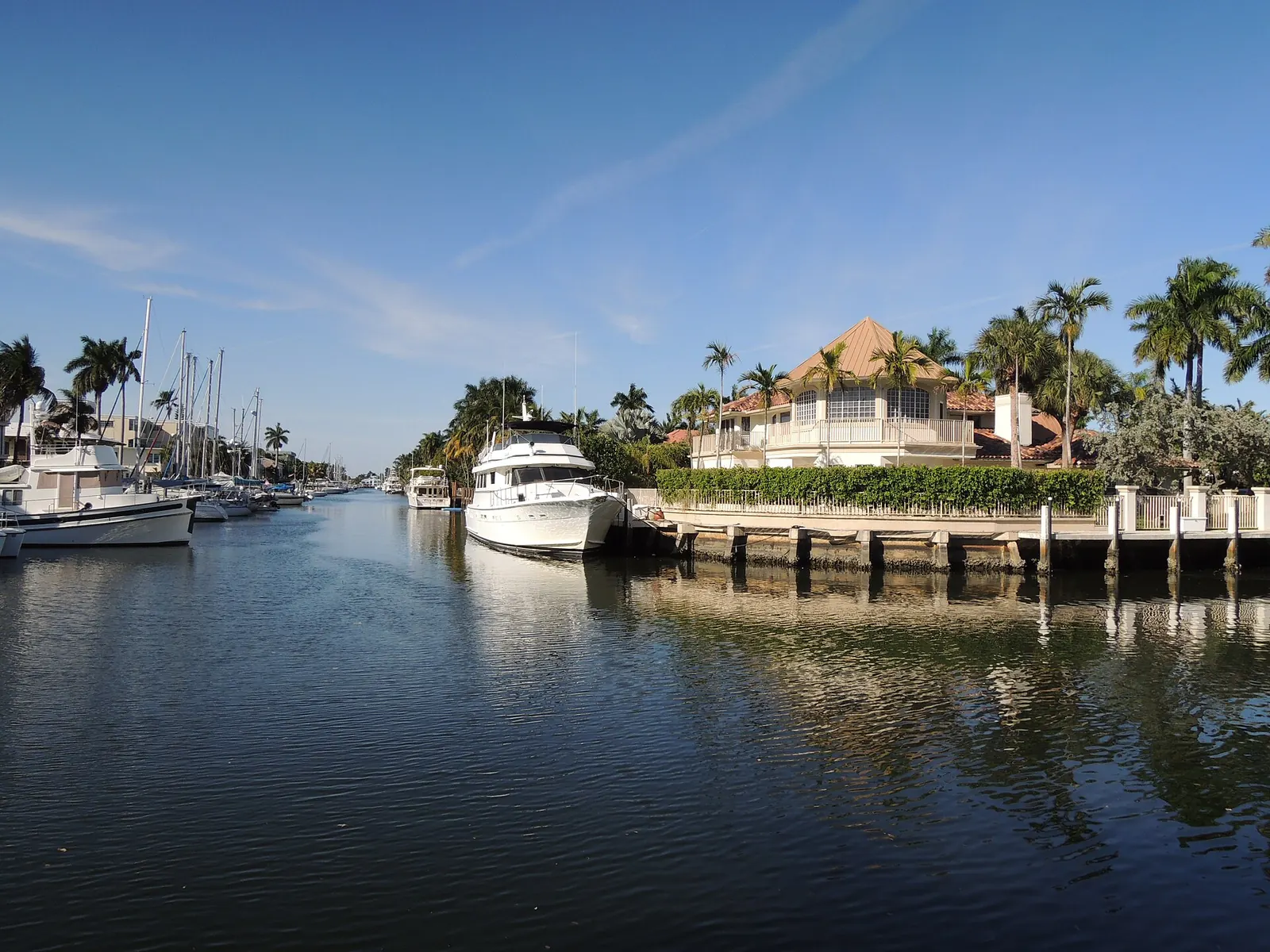
This is a guide to choosing between them and to what each one costs. The costing pages carry the calculators; this page covers the decision that comes first, because picking the wrong structure is more expensive than paying too much for the right one.
On this page
The four options
Shoreline armor sits on a spectrum from hard and vertical to soft and sloped. Moving down that spectrum generally means less money, an easier permit, better habitat outcomes and more of your yard given over to the structure.
Hard · vertical
Seawall
Engineered to absorb and deflect wave energy. Holds a vertical edge, takes the least yard, costs the most, and is increasingly hard to permit on open shoreline.
Hard · vertical
Bulkhead
Retains soil in calmer water rather than fighting waves. Same trade and same crews, lighter sections and shallower embedment.
Hard · sloped
Riprap revetment
Graded rock on a slope. Permeable, forgiving, roughly half the price of a wall — and it eats several feet of bank.
The fourth option is the living shoreline: native plantings, and in tidal water oyster or mussel structures, sometimes with a rock toe. On low-energy shoreline it costs less than rock, permits faster, and holds as well. On high-energy shoreline it is not a substitute for structure. It is worth raising with a contractor early rather than late, because a hybrid design — rock at the toe, planted above — often clears review faster than hard armor alone.
What is a seawall?
A seawall is a vertical or near-vertical structure built along a shoreline to stop waves from reaching the land behind it. Its job is to absorb and deflect wave energy, so it is built heavier than anything else on this page: sheet pile or concrete driven or poured well below the mudline, tied back into the bank, and capped. Where a bank is losing ground to open water, wind-driven waves or ice, a seawall is usually the structure a marine contractor proposes first, and it is the one a permit reviewer looks at hardest.
Two things follow. A seawall holds the edge exactly where it is, which is why it takes the least yard of any option. And it reflects wave energy rather than dissipating it, which is why the base of a seawall scours and why seawall repair so often starts at the toe. The seawall cost guide prices it by material and per linear foot.
Seawall vs bulkhead
The two words are used interchangeably in most of the country, and the same crews build both. The difference is what the structure is designed to resist. A seawall resists waves. A bulkhead retains soil in calm water: a canal, a protected cove, a marina edge. A bulkhead is lighter in section, embedded less deeply, and priced accordingly — bulkhead cost typically runs $12,000 to $50,000 on a residential lot, against $30,000 to $80,000 for a standard seawall replacement.
The practical test is exposure. If waves or ice hit the structure, it is a seawall whatever the quote calls it, and it needs seawall embedment and tiebacks. If the water in front of it is flat on a windy day, a bulkhead will do. A “bulkhead seawall” on a quote usually means a hybrid: a bulkhead section with a heavier cap and toe protection. Ask which design assumptions were used, because a bulkhead built where a seawall was needed is the most common way to pay for the same wall twice.
Which one fits your shoreline
Three questions settle it, in this order.
How much energy hits the bank? Direct wave exposure on open water, or ice on a northern lake, means a seawall or heavy riprap. A canal, a protected cove or a pond means a bulkhead or light rock will do, and paying for seawall-grade structure there is the most expensive way to save money in this trade.
How much yard can you give up? This is usually the binding constraint and it is decided by geometry, not preference. Riprap needs a slope: at the 2:1 maximum, a five-foot bank consumes about ten feet of horizontal space. If the lawn, the pool deck or the property line sits inside that, rock does not physically fit and you are back to a vertical structure whether you wanted one or not.
What is behind the wall? A lawn is one load case. A driveway, a pool deck or a building footing within the failure wedge behind the structure is a different and much more expensive one, and it usually forces engineered tiebacks regardless of which option you pick.
What each costs
National ranges for 2026, installed. These overlap heavily, which is the point: material choice matters less than site access and how deep the structure has to go.
| Structure | Cost per linear foot | Typical 100 ft project |
|---|---|---|
| Seawall | $150 – $650 | $26,000 – $69,000 fully scoped |
| Bulkhead | $150 – $650 | $19,000 – $63,000 replacement |
| Riprap | $80 – $300 | $10,000 – $40,000 |
| Seawall repair | $100 – $250 | $8,000 – $20,000 for tiebacks |
Two things move these numbers more than anything on a spec sheet. The first is site access: land, restricted or barge-only is roughly a 0.9 / 1.15 / 1.5 progression across the whole job, and it is decided by your side yard rather than your shoreline. The second is embedment depth, set by a soil probe — the part of the structure below the mudline is usually as long as the part you can see, sometimes twice, and nobody can price a wall honestly without probing first.
Why shoreline structures fail
Almost never at the top, and almost never because the material wore out. They fail from the bottom and from behind.
The toe. Water scours the base of the structure, the lowest course loses its support, and everything above it follows. On riprap the fix is a keyed-in toe trench; on a wall it is rock placed at the base. Repairs that do not address the toe fail again in the same place, which is why a wall can be repaired twice and still be going.
Soil leaving through the structure. Filter fabric behind a wall, or a non-woven geotextile layer under riprap, lets water out while holding fines in. It is the cheapest line on any quote and its absence is what produces the sinkholes that appear in a lawn near a wall years later. The bank washes out from underneath while the rock or the panel sits there looking fine.
Tiebacks, on anything vertical. The panel holds the soil face; the anchor holds the panel. A leaning wall with intact panels is nearly always an anchor problem — and that is good news, because new tiebacks typically cost 20 to 30 percent of replacement and restore most of the remaining service life.
Undersized stone, on riprap. Federal post-storm forensic work keeps finding the same three causes: stone too small for the design velocity, an armor layer thinner than twice the median stone size, and no filter layer. None of the three is visible on the day the job finishes. Work that fails looks identical to work that lasts.
The permit path
This is where waterfront work stops resembling any other home improvement project, and it is the part most cost estimates leave out entirely. Expect three layers.
Federal. Work placing material in navigable waters needs authorisation from the Army Corps of Engineers. Most bank stabilisation goes through Nationwide Permit 13; living shorelines have their own fast-track route, Nationwide Permit 54, created because qualifying small projects were being pushed into slower individual permits. Both were reissued in the nationwide permit package effective March 2026 and running to 2031 — a round that added nature-based language to the bank-stabilisation permit, so rock-and-planting hybrids now sit more comfortably inside it than they used to.
State. An environmental or tidal-wetlands permit, named differently in every state. Several states run joint or programmatic permits that collapse the federal and state steps into one application, which is worth asking about before anyone fills in two.
Local. A building permit, plus zoning setbacks and, in some coastal jurisdictions, a separate coastal construction line permit.
Three things are worth knowing before you start. Replacing in the existing footprint is by far the easiest path — moving a structure waterward, even by the foot or so involved in driving new sheet in front of an old bulkhead, can convert an in-kind replacement into new encroachment. Riprap has more exemptions available than walls do: several states publish length thresholds below which shoreline rock is exempt or covered by a general permit, so it is worth checking the exemption before assuming a full application. And unpermitted work does not stay quiet — agencies can order removal at the owner's expense, and in some states past unpermitted shoreline work carries a specific disclosure duty when the property sells.
Budget two to six months for permitting on a straightforward replacement, longer where a habitat assessment or a seasonal work window applies. Start that conversation well before you want the work done; the construction itself is two to six weeks.
Repair or replace
The usable crossover is around half of replacement cost. Below it, repair. Above it you are paying replacement money for a structure that keeps the age and the failure history of the old one.
The exception is worth knowing because it is the best value in the category: a wall with sound panels and failed anchors. New tiebacks there run 20 to 30 percent of replacement and buy back most of the service life. The decisive question is never the visible damage — it is whether the anchors and the backfill are intact, since a wall can look perfectly sound and still be actively losing soil behind it.
If you do nothing else preventively, photograph the structure from the same positions once a year. When something does look wrong, a proper inspection is what tells you which of the failure modes you are dealing with, and seawall repair covers what each one takes to fix. Shoreline failure is slow, and a five-year photo series is worth more diagnostically than any single inspection.
Cost guides
Seawall cost
New build and full replacement, priced per linear foot by material, with a calculator covering embedment, access and demolition.
Seawall repair
The four failure modes, what each repair involves, how long it takes, and how to tell a diagnosis from a guess.
Seawall inspection
What an inspection covers, what it costs, and why a home inspection does not include the seawall.
Seawall repair cost
Tiebacks, void filling, cap and panel work, priced by damage type — and where repair stops being worth doing.
Bulkhead cost
The calmer-water structure: soil retention rather than wave defence, and what replacement adds over new construction.
Riprap cost
Rock revetment by the ton and by the foot, with the tonnage maths worked properly and cross-checked against per-foot quotes.
A note on scope. These pages cover the structure at the water's edge. Groundwater arriving at a foundation from behind is a different problem with different solutions — see foundation water and French drains. The two do interact on waterfront lots, and a wall that is holding perfectly can still sit in front of a wet basement.