2026 cost guide
Riprap cost
Riprap runs $80 to $300 per linear foot of shoreline installed, with the stone itself at $30 to $100 per ton. It is the cheapest durable shoreline armor available and the one most often installed wrong — the failures are almost never about how much rock was bought.
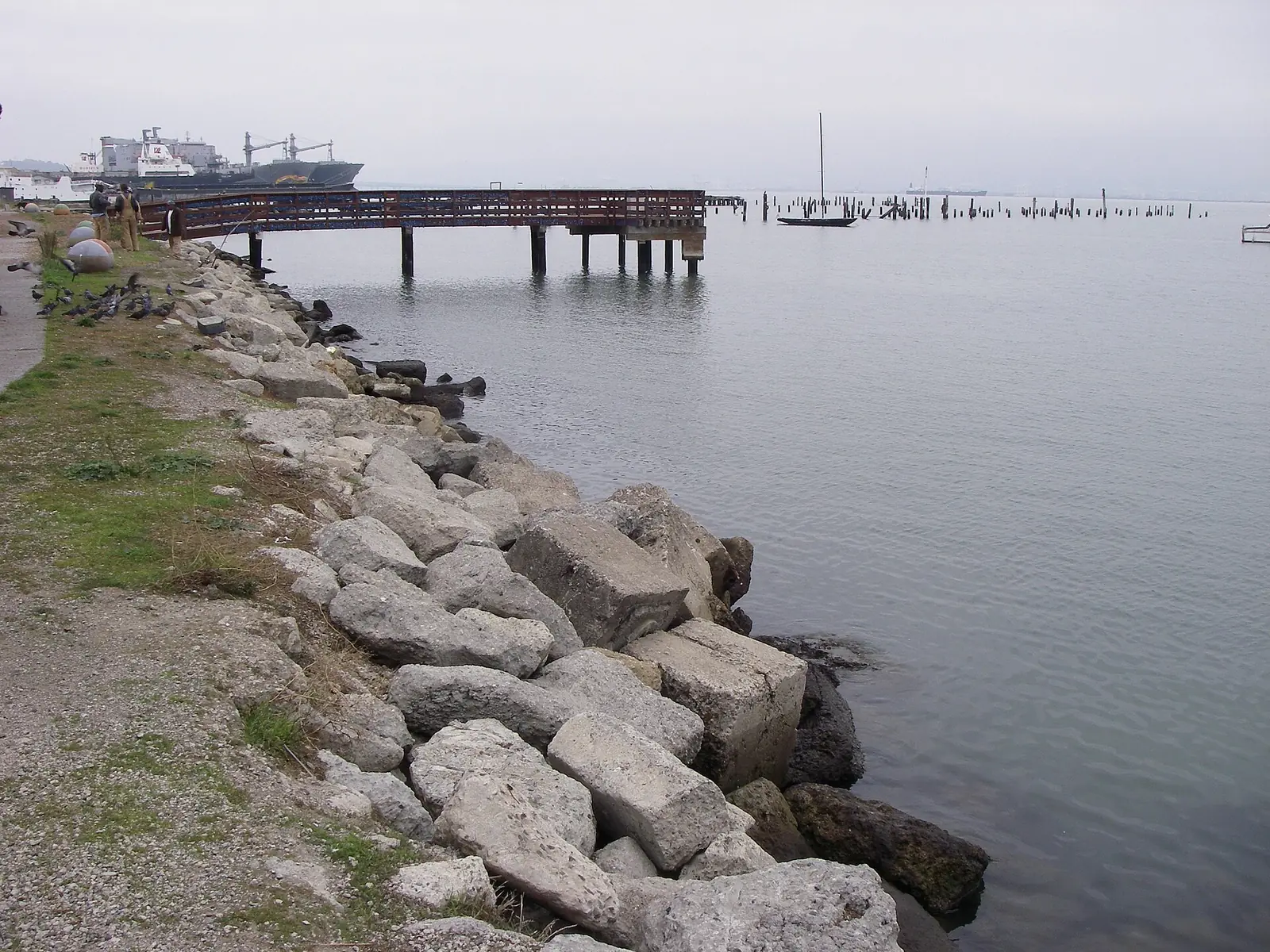
A 100-foot residential lakeshore at standard armor thickness runs roughly $10,000–$40,000 with filter fabric, a keyed toe and permitting included. Add bank regrading and the top of that range moves toward $49,000. Premium cold-climate work built to survive ice runs above that again.
Rip rap calculator: estimate your installation
| Line item | Low | High |
|---|
What is rip rap?
What is riprap? Rip rap, riprap, rip rap rock, riprap rock, rip rap stone: five spellings for the same thing. It is loose, angular, quarried stone placed on a slope to armor a bank against waves, current and ice. The stone is graded by size class rather than sold as one product; residential lakeshore work is commonly specified in the 6-to-12-inch median range, while a river bend or open shoreline moves to larger classes sized against the design velocity. Limestone, granite and basalt are the usual quarry sources, and local geology sets which one is cheap where you live.
What makes riprap work is not the rock but what is under it: a non-woven geotextile filter or a graded bedding layer that stops the soil migrating out through the gaps. Angular stone locks together; rounded river rock does not, and is not a substitute. The rest of this page prices the stone by the ton, converts that to rip rap cost per foot of shoreline, and shows where the numbers go wrong.
What you are paying for
Riprap looks like the simplest work in this category: put big rocks on a bank. The pricing reflects that simplicity. The failures do not — and nearly all of them trace back to the two cheapest line items below.
| Line item | Typical range | Notes |
|---|---|---|
| Armor stone | $30 – $100 / ton | Limestone $30–$45, basalt $35–$50, granite $40–$100. Local geology drives this more than anything. |
| Delivery | $5 – $15 / ton | Rises steeply with distance from the quarry. |
| Placement labor and machine time | $30 – $60 / ton | Excavator with a thumb, placing stone individually rather than dumping it. |
| Non-woven geotextile filter fabric | $1.00 – $2.00 / sq ft | The single most important item on this list. See below. |
| Toe key trench | $1,500 – $6,500 | A buried trench at the base holding the bottom course. Without it the toe unravels first. |
| Bank regrading | $2,000 – $9,000 | Cutting the bank back to a stable slope before stone goes on. |
| Permits, survey and engineering | $800 – $5,000 | Often lighter than seawall permitting — some states exempt riprap outright below a length threshold. |
| Native plantings above the stone | $1,500 – $12,000 | Optional, sometimes required, and frequently the reason a permit is granted quickly. |
Scope tiers
Light bank protection
Under 75 ft, small stone, gentle slope, truck access, minimal regrading.
A pond bank or a low-energy inland lakeshore.
Standard shoreline armor
100–200 ft, Class III–IV stone, filter fabric, toe key, some regrading.
The typical residential lakeshore job.
Heavy armor or engineered revetment
Large stone, ice or open-water exposure, full engineering, barge access or long haul.
Great Lakes shoreline, river bends, and anywhere a failed seawall is being replaced with rock.
Riprap cost per ton, and how much you need
Stone runs $30 to $100 per ton at the quarry — limestone $30–$45, basalt $35–$50, granite $40–$100 — with delivery adding $5–$15 and placement $30–$60, so $65 to $175 per ton delivered and placed covers most jobs. Published all-in figures reach $300 per ton where access is difficult.
Tonnage is where homeowner estimates go wrong, so work it from volume rather than from a coverage rule of thumb. Placed riprap runs about 1.35 to 1.5 tons per cubic yard, so an armor layer 24 to 36 inches thick needs roughly 10 to 17 tons per 100 square feet of slope face. The slope face is considerably longer than the bank is tall: on a 2:1 slope a 5-foot bank presents about 11 feet of face for every foot of shoreline. Multiply those together and a typical residential lakeshore needs about 1.1 to 1.9 tons per linear foot. Add 15 percent for waste and settlement.
That figure is worth cross-checking, because it is the one number that ties the two ways of quoting this work together: 1.1 to 1.9 tons per foot at $65 to $175 per ton lands at roughly $80 to $300 per linear foot — which is exactly where per-foot quotes sit. If a tonnage estimate you are given does not reconcile with the per-foot price that way, one of the two is wrong.
How region changes the number
Labor is most of this cost, so metro wage rates move the total more than materials do. Apply these against the national range above.
| Region | Adjustment | Example metros |
|---|---|---|
| South Florida & the Gulf | $250 – $700 / ft | Layered permitting (state ERP, coastal control line, USACE), manatee work windows, barge access common. |
| Texas & Louisiana Gulf coast | $150 – $450 / ft | Deepest bench of marine contractors in the country; competitive pricing, soft soils, deep embedment. |
| Chesapeake & Mid-Atlantic | $200 – $550 / ft | Timber and vinyl bulkheads dominate; state tidal-wetlands review adds weeks, not usually dollars. |
| Great Lakes | $200 – $600 / ft | Ice loading drives heavier sections and deeper toes than wave height alone would suggest. |
| Pacific Northwest & California | $300 – $900 / ft | The hardest permitting in the country. Washington treats bulkheads as a last resort and pushes soft-shore alternatives; Oregon bars beachfront protective structures where development post-dates 1 January 1977. |
| Inland lakes & reservoirs | $120 – $350 / ft | Lowest energy and lowest cost, but lake associations and drawdown windows control the schedule. |
What drives the price up
- Stone size, set by flow velocity and wave height. Federal drainage guidance sizes riprap by median stone diameter against design velocity. Undersized stone is the most common cause of failure, and it is invisible on the day the job finishes.
- Layer thickness. Federal guidance sets the minimum armor layer at 1.5 times the median stone diameter, with twice that diameter preferred. A single layer of large stone looks impressive and performs badly.
- The filter layer. Non-woven geotextile between soil and stone lets water pass and holds fines back. Skip it and the bank washes out from underneath while the rock is still sitting there.
- The toe. Riprap fails from the bottom. A keyed-in toe trench is what stops the lowest course from being undermined and taking the rest down with it.
- Haul distance from the quarry. Stone is heavy and low-value per ton, so freight is a large fraction of delivered cost. Regional price differences are mostly trucking, not rock.
- Ice, in northern lakes. Ice loading and ice heave govern stone size on the Great Lakes and inland northern water far more than summer wave energy does.
Can you install riprap yourself?
This is the one item in this cluster with a real DIY path, and it is still narrower than it looks. On a small pond bank outside jurisdictional water, with truck access and modest stone, an owner with an excavator can do respectable work: material for 50 feet runs $1,500–$4,000. The parts that go wrong are not the parts that look hard. Stone gets sized by eye and turns out too small for the design velocity. Filter fabric gets skipped because the rock is obviously the important bit. The toe gets laid on the existing grade rather than keyed into a trench. Each of those looks completely fine at completion, and each of them fails in three to five years — typically as a slumped section with the rock still in place, sitting on top of a bank that has quietly washed out beneath it.
Reading a quote
Get three. Quotes on identical riprap installation work routinely vary by 40 percent, and the spread is usually scope, not margin — one bid includes something the others excluded.
Check specifically for:
- What stone class or median diameter is specified? A quote that says “rip rap” with no size is not a specification.
- Is non-woven geotextile included, and is it non-woven? Woven fabric is a different product with different drainage behavior and is not a substitute here.
- How thick is the armor layer? Minimum 1.5× the median stone size, and 2× is the preferred figure in federal guidance.
- Is the toe keyed into a trench, and how deep?
- What slope will the finished bank sit at? 2:1 is the usual maximum without engineering.
- Is stone priced by the ton delivered, or by the foot installed? Both are normal; mixing them between bids is how comparisons go wrong.
- Who handles the permit, and has anyone checked whether the project qualifies for an exemption or general permit before assuming a full application?
Common questions
How much does riprap cost per ton?
$30 to $100 per ton for the stone itself in 2026 — limestone $30–$45, basalt $35–$50, granite $40–$100. Delivery adds $5–$15 per ton and placement $30–$60. That puts delivered-and-placed cost at $65–$175 per ton for most jobs, with published all-in figures reaching $300 per ton where access is poor or the haul from the quarry is long.
How much riprap do I need per foot of shoreline?
Roughly 1.1 to 1.9 tons per linear foot for a typical residential lakeshore, plus 15 percent for waste and settlement. Work it from volume rather than a coverage rule of thumb: placed riprap runs about 1.35 to 1.5 tons per cubic yard, so a 24 to 36 inch armor layer needs 10 to 17 tons per 100 square feet of slope face — and the face is longer than the bank is tall, about 11 feet of face per foot of shoreline on a 5-foot bank at 2:1. Sanity-check any tonnage estimate against the per-foot price: at $65 to $175 per ton delivered and placed, that range lands at $80 to $300 per linear foot. If the two do not reconcile, one of them is wrong.
Is riprap cheaper than a seawall?
Typically 40 to 60 percent less for the same length, and the permitting is often easier because agencies generally prefer sloped, permeable rock to vertical hard armor. The cost is footprint: riprap needs a slope and will consume several feet of yard, and it cannot hold a vertical bank or give you a walkable edge.
Do I need a permit to place riprap?
Often, but riprap has more exemptions available than seawalls do. Several states publish length thresholds below which shoreline rock is exempt from individual permitting. Wisconsin is a clearly published example: qualifying riprap up to 200 linear feet on streams, inland lakes and flowages, or 300 feet on the Great Lakes, can be placed without a permit — and that exemption covers new riprap, repair and replacement, and replacing an existing seawall with rock. It comes with real conditions: stone within a specified size range, limits on height above the ordinary high water mark and how far the toe extends waterward, a maximum slope, and native replanting above the storm-wave height. It is also unavailable on waters designated as Areas of Special Natural Resource Interest. Federal authorisation under Nationwide Permit 13 — reissued in the March 2026 package — covers most bank stabilisation separately. Check your own state’s exemption before assuming a full application — and check it with the agency, since these thresholds change.
Why does riprap fail?
The federal design manual for rock revetment, FHWA’s HEC-11, catalogues the mechanisms: particle erosion, translational slide, modified slump and slump. In residential work they nearly always trace to three decisions — stone sized too small for the design velocity, an armor layer thinner than the 1.5× median-diameter minimum, and no filter layer between stone and soil, since riprap alone does not stop fine soil migrating out from underneath it. None of the three is visible on the day the job finishes, which is exactly why they keep happening — the work that fails looks identical to the work that lasts.
Does riprap need maintenance?
Less than any other option, but not none. Expect to reset displaced stone after major storms or a hard ice-out, and to watch the toe for undermining and the crest for stone migrating downslope. A well built revetment on appropriate stone should need attention every few years, not every season.
Riprap or a living shoreline?
Living shorelines — native plantings, and in tidal water oyster or mussel structures — are increasingly the preferred approach where wave energy allows, and federal Nationwide Permit 54 exists specifically to fast-track qualifying small projects. The Corps leaned further this way in the March 2026 nationwide permit reissuance, which added nature-based language across the bank-stabilisation and living-shoreline permits alike. Several states run their own streamlined or exempt path as well. On low-energy shoreline they cost less than rock and permit faster. On high-energy shoreline they are not a substitute, though a hybrid with a rock toe and planted upper bank often permits more easily than rock alone.
Rip rap seawall cost is the comparison most people are really asking about: rock typically runs 40 to 60 percent less than a wall of the same length, at $80 to $300 per foot against $150 to $650 for a seawall, and it is the standard toe protection when an existing wall is being repaired rather than replaced.
Related costs
Seawall vs bulkhead
Which structure your shoreline actually needs, and why the answer changes the price.
Seawall repair
What fails, what each repair involves, and when replacement is the better call.
Seawall cost
New build and full replacement, priced per linear foot by material.
Bulkhead cost
The calmer-water cousin: soil retention rather than wave defence.
Seawall repair cost
Tiebacks, void filling, cap and panel work — and when repair stops being worth it.
Foundation water
Where shoreline groundwater and structural water problems overlap.
Get quotes from riprap installation contractors near you
Up to three local contractors, no cost. Worth doing as a sanity check against the estimate above.