2026 cost guide
Seawall repair cost
Seawall repair runs $100 to $250 per linear foot for most work, with structural rebuilds reaching $400 to $600. The number nearly always turns on one question: is the panel damaged, or is the soil behind it already leaving?
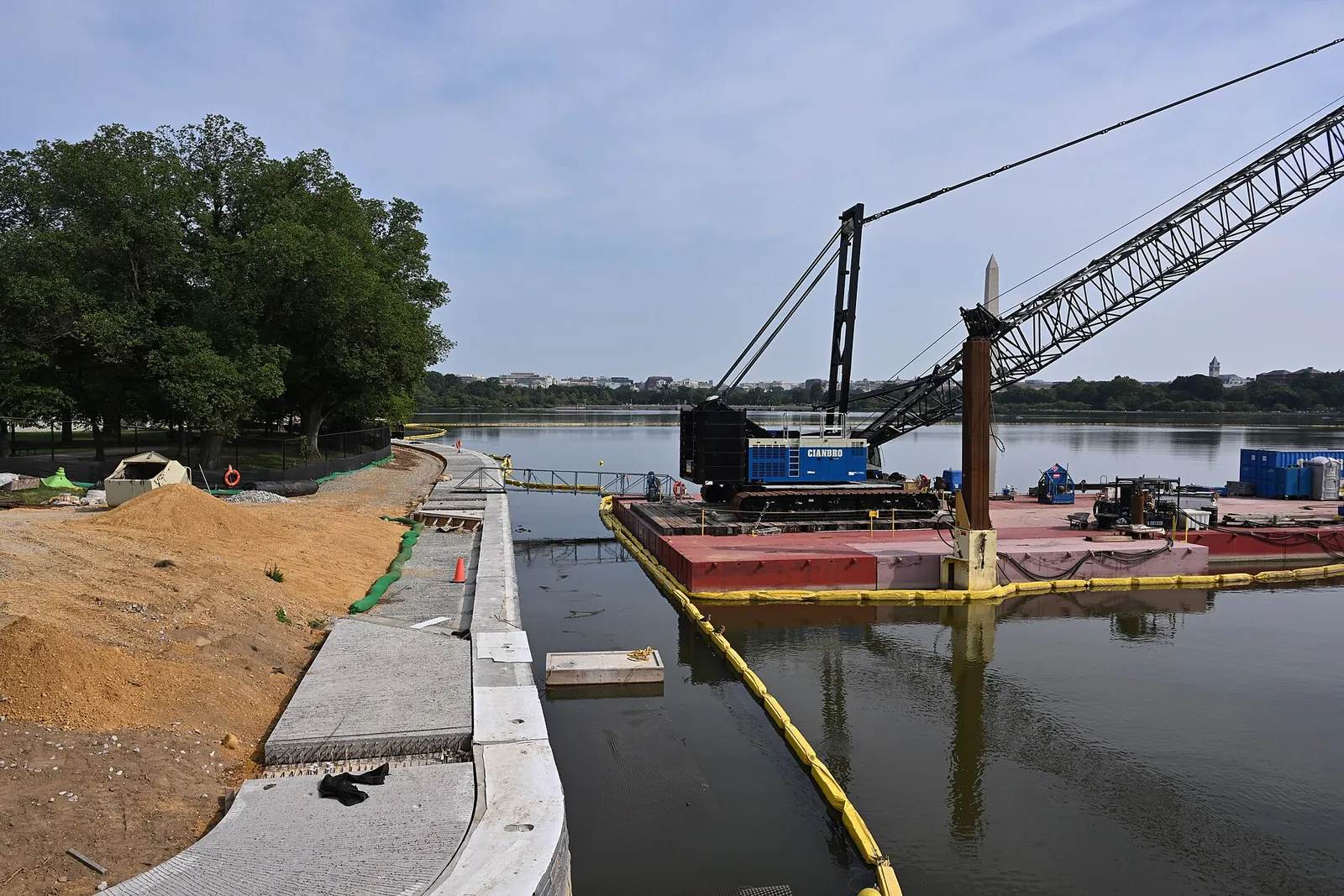
Sealing joints and patching spalls on a 60-foot wall runs $3,000–$7,500. Installing new tieback anchors on the same wall runs $8,000–$20,000 before void filling and yard restoration, which together add $1,600–$7,800 more. Replacing failed panels approaches replacement pricing and should be compared against it directly.
Estimate your seawall repair
| Line item | Low | High |
|---|
What you are paying for
Repair pricing is less standardised than new construction, because two walls with identical visible damage can need completely different work. What you are really paying for is the diagnosis.
| Line item | Typical range | Notes |
|---|---|---|
| Inspection and void survey | $400 – $1,800 | Probing or radar to find soil loss behind the wall. Worth buying before any quote. |
| Crack and joint sealing | $25 – $70 / ft | Cosmetic to semi-structural depending on method. |
| Void filling | $1,200 – $6,000 | Polyurethane injection or cementitious grout into the washed-out space behind the panel. |
| Tieback and anchor installation | $1,000 – $3,000 each | Typically at 6 to 10 ft centers. The highest-value repair available on a leaning wall. |
| Cap repair or replacement | $80 – $200 / ft | Cracked or separated concrete cap. |
| Panel replacement | $150 – $400 / ft | Approaching new-wall pricing, on a wall with the age of the old one. |
| Toe protection (riprap at the base) | $80 – $250 / ft | Stops scour undermining the wall. Frequently the actual fix. |
| Backfill and restoration | $1,200 – $6,000 | Replacing lost soil and putting the yard back. |
Scope tiers
Bulkhead repair cost runs on the same three tiers. A bulkhead is a lighter structure in calmer water, so the structural band usually lands nearer its low end; see the bulkhead cost guide for what a full replacement would run against it.
Cosmetic and preventive
Joint sealing, spall patching, minor cap work, small void fills.
A wall in fundamentally sound condition being maintained rather than rescued.
Structural repair
New tiebacks, substantial void filling, cap replacement, toe riprap.
A leaning or soil-losing wall whose panels are still good. The best-value band in this trade.
Partial rebuild
Panel replacement over a run, or rebuilding a collapsed section.
Compare directly against full replacement before proceeding.
Seawall repair cost per linear foot
Most repair work prices at $100 to $250 per linear foot. Cosmetic sealing sits at the bottom of that band, tieback installation in the middle to upper part, and full structural repair runs $400 to $600. The comparison that matters is against replacement: at $150–$650 per foot for a new wall, a repair quote above roughly half the replacement figure deserves hard scrutiny, because you are spending replacement money on a wall that keeps its original age and its original failure history.
How region changes the number
Labor is most of this cost, so metro wage rates move the total more than materials do. Apply these against the national range above.
| Region | Adjustment | Example metros |
|---|---|---|
| South Florida & the Gulf | $250 – $700 / ft | Layered permitting (state ERP, coastal control line, USACE), manatee work windows, barge access common. |
| Texas & Louisiana Gulf coast | $150 – $450 / ft | Deepest bench of marine contractors in the country; competitive pricing, soft soils, deep embedment. |
| Chesapeake & Mid-Atlantic | $200 – $550 / ft | Timber and vinyl bulkheads dominate; state tidal-wetlands review adds weeks, not usually dollars. |
| Great Lakes | $200 – $600 / ft | Ice loading drives heavier sections and deeper toes than wave height alone would suggest. |
| Pacific Northwest & California | $300 – $900 / ft | The hardest permitting in the country. Washington treats bulkheads as a last resort and pushes soft-shore alternatives; Oregon bars beachfront protective structures where development post-dates 1 January 1977. |
| Inland lakes & reservoirs | $120 – $350 / ft | Lowest energy and lowest cost, but lake associations and drawdown windows control the schedule. |
What drives the price up
- Whether soil is already leaving. A crack is cheap. The void behind the crack is not, and the void is what eventually takes the wall down.
- Tiebacks versus panels. Anchor work is the high-value repair; panel work is the expensive one. A good inspection separates them, a bad one quotes both.
- Toe scour. Erosion at the base of the wall undermines everything above it. Repairs that do not address the toe fail again in the same place.
- Access, again. Barge mobilisation for a small repair can exceed the repair itself, which is why bundling repairs into one visit matters more here than on a full replacement.
- Material. Vinyl and timber are simpler to work on than steel or reinforced concrete, which need cutting, welding or forming on site.
- Whether the original work was permitted. Repairs to unpermitted structures can trigger a review of the whole wall, which is occasionally how a $6,000 repair becomes a replacement conversation.
What can you actually do yourself?
Sealing surface cracks and small joint gaps above the waterline with a marine-grade polyurethane sealant is a legitimate homeowner job, and it is genuinely preventive — joints are where soil escapes. Materials run $100–$400. Everything else on this page is not DIY work: void filling needs injection equipment and a feel for when you are filling a void versus jacking a wall, tiebacks are engineered structural elements, and anything below the waterline is regulated work in most jurisdictions. The single most valuable unpaid thing you can do is photograph the wall from the same positions every year. Seawall failure is slow, and a five-year photo series is worth more diagnostically than any one inspection.
Reading a quote
Get three. Quotes on identical seawall repair work routinely vary by 40 percent, and the spread is usually scope, not margin — one bid includes something the others excluded.
Check specifically for:
- Was a void survey done, or is the quote based on what is visible? This separates a diagnosis from a guess.
- Does it address the toe? If scour caused the problem, cosmetic work upstairs will not hold.
- How many tiebacks, at what spacing, and to what depth? Anchors that are too short do nothing at all.
- Is restoration included? Void filling and anchor work both disturb the yard.
- What is the warranted life of the repair? Ask for it in years. A contractor unwilling to state one is telling you something useful.
- Has replacement been priced as an alternative? An honest marine contractor will do this unprompted on any wall in the upper repair band.
Common questions
How much does seawall repair cost per foot?
$100 to $250 per linear foot for most repairs in 2026. Minor crack and joint sealing runs $25–$70 per foot, tieback installation $1,000–$3,000 per anchor at 6 to 10 foot centers, and full structural repair $400–$600 per foot.
When is repair no longer worth it?
Around half of replacement cost is the practical crossover. Above that you are paying new-wall money for old-wall remaining life. The exception is a wall with sound panels and failed anchors — new tiebacks on a good wall are often 20 to 30 percent of replacement cost and restore most of the service life, which is the best value in the whole category.
What causes the sinkholes in my lawn near the seawall?
Soil escaping through the wall — usually through failed joints, a cracked panel, or a missing or torn filter fabric behind it. The lawn depression is the late symptom of a void that has been growing for a while. It is a structural warning, not a landscaping problem, and it does not stop on its own.
Can a leaning seawall be straightened?
Sometimes, and it is usually attempted with new tiebacks that take load and arrest further movement rather than pull the wall fully upright. Forcing a leaning wall back to vertical can crack panels and disturb backfill. Most contractors will stabilise in place and be honest that the lean stays visible.
Does a damaged seawall have to be disclosed when selling?
Rules vary by state, but a known material defect that a buyer would not readily spot generally has to be disclosed. In Florida that duty comes from case law rather than a disclosure statute, and it applies even on an as-is sale; the standard state contract form also asks the seller directly about improvements made without required permits. Beyond the legal question, buyers’ inspectors look at seawalls closely in waterfront markets, and lenders and insurers increasingly ask about condition — so an undisclosed problem tends to surface during the transaction anyway, at the worst possible moment. Confirm your own state’s position with a real estate attorney rather than relying on this page.
Do I need a permit for seawall repair?
It depends on scope. Cosmetic sealing above the waterline usually does not. Structural repair, anything below the waterline and anything that places material in the water usually does. In-kind repair in the existing footprint is the easiest path; the moment the work changes the wall’s position or dimensions it is treated much more like new construction.
How long does a seawall repair take?
Sealing and patching is one to three days. Void filling is two to four. Tieback installation on a typical residential run is three days to two weeks depending on anchor count and access. Panel replacement runs two to four weeks and needs the same permitting lead time as new construction.
Related costs
Seawall vs bulkhead
Which structure your shoreline actually needs, and why the answer changes the price.
Seawall inspection
What an inspection covers and why it is the cheapest decision you can buy here.
Seawall cost
New build and full replacement, priced per linear foot by material.
Riprap cost
Rock revetment by the ton and by the foot, and why most failures are sizing failures.
Bulkhead cost
The calmer-water cousin: soil retention rather than wave defence.
Foundation water
Where shoreline groundwater and structural water problems overlap.
Get quotes from seawall repair contractors near you
Up to three local contractors, no cost. Worth doing as a sanity check against the estimate above.