2026 cost guide
Seawall cost
Most residential seawall projects land between $15,000 and $60,000, or roughly $150 to $650 per linear foot installed. Material choice gets all the attention, but the two things that actually move the number are how deep the wall has to be driven and whether a machine can reach the site from dry land.
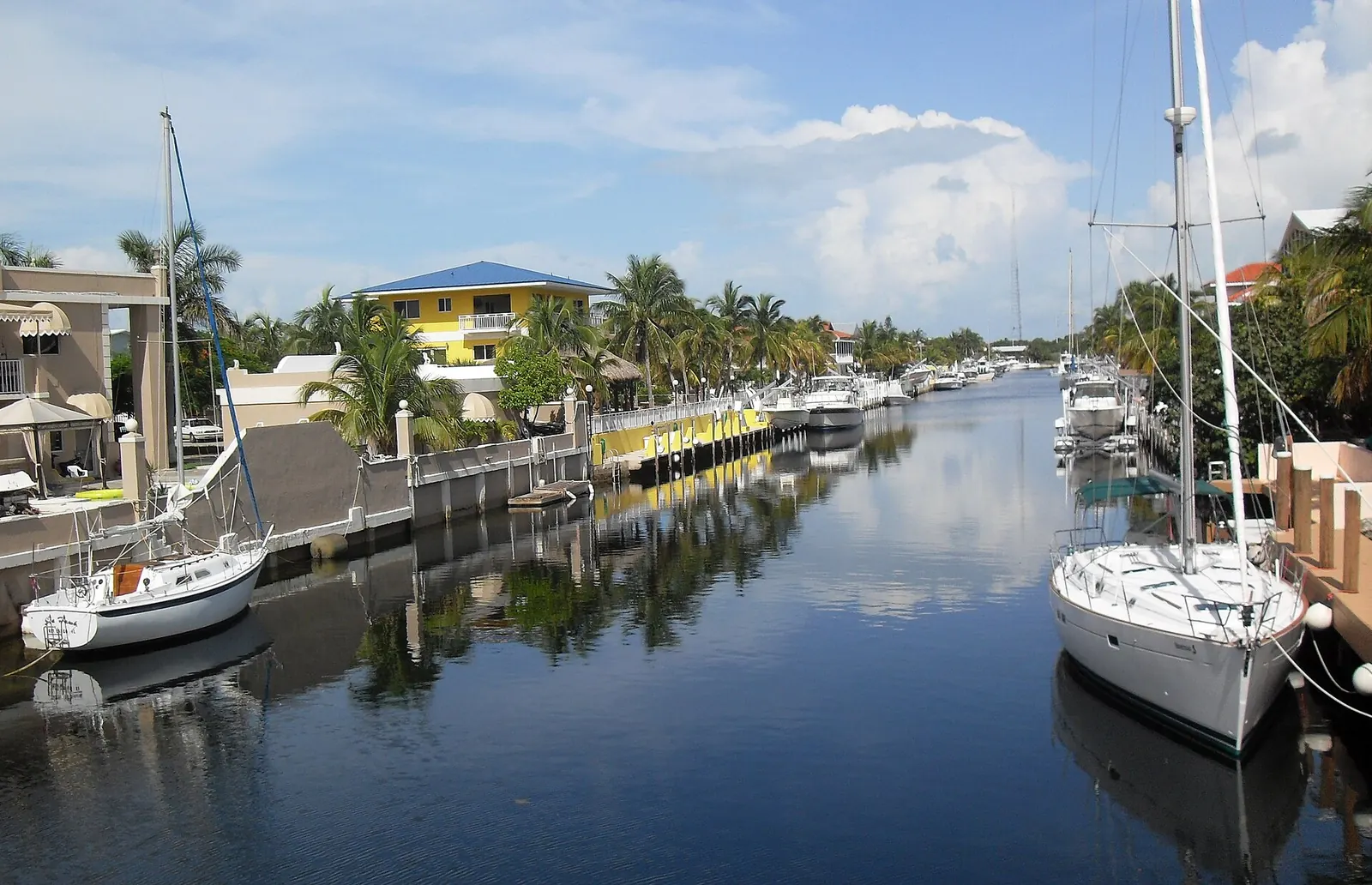
A 100-foot vinyl replacement — the most common residential job in the country — runs roughly $26,000 to $69,000 fully scoped: old wall demolished and hauled, new tieback anchors, permits and sealed drawings included. Driving the new wall in front of the old one and leaving it as backing takes about $2,000 to $5,000 off that. Open-water concrete and steel on high-energy shoreline runs $700 to $2,000 per foot and is priced as marine construction, not landscaping.
Seawall cost calculator
| Line item | Low | High |
|---|
What you are paying for
A seawall quote is one big mobilisation cost plus a per-foot rate. The per-foot rate is what contractors compete on; the mobilisation is what makes short walls feel absurdly expensive and long walls feel like a bargain.
| Line item | Typical range | Notes |
|---|---|---|
| Mobilisation and equipment | $2,500 – $25,000 | Barge, crane, excavator, vibratory hammer. Largely fixed — it does not scale with wall length. |
| Sheet pile or wall material | $60 – $250 / ft | Vinyl, steel, timber or concrete. The cheapest line to substitute and the easiest to under-spec. |
| Driving and installation labor | $80 – $300 / ft | Rises sharply with embedment depth and soil density. |
| Tieback anchors and whalers | $40 – $120 / ft | Deadman anchors set back into the soil. Most leaning walls are tieback failures, not panel failures. |
| Concrete cap | $60 – $180 / ft | Ties the panel heads together and takes the loading. Sometimes quoted as optional. It is not. |
| Filter fabric and drainage stone | $15 – $45 / ft | Lets water out while holding soil in. The cheapest item on the list and the one whose absence causes the sinkholes behind a wall. |
| Permits, survey and sealed drawings | $1,500 – $9,000 | Multiple agencies. Weeks to months, and occasionally the reason a project does not happen. |
| Demolition and disposal of the old wall | $40 – $140 / ft | Treated timber and concrete rubble are regulated waste in most jurisdictions. |
Scope tiers
How much does a seawall cost? For most owners the honest answer is one of the three bands below. The cost to replace a seawall sits in the middle band; a new wall on a sheltered lot with nothing to remove sits in the first.
Short sheltered run
Under about 60 ft, wall under 4 ft exposed, land access, vinyl or timber.
A canal lot, an inland lake, or a pond bank.
Standard residential replacement
75–150 ft, 4–7 ft exposed, vinyl or steel, old wall removed, tiebacks, concrete cap.
The typical job, and the one most of this page is calibrated to.
Open water or engineered
Concrete or heavy steel, deep embedment, barge access, full engineering and geotechnical work.
Direct wave exposure, tall banks, or anything a permit reviewer calls a hardened shoreline.
Seawall cost per linear foot
The working range is $150 to $650 per linear foot installed. By material: pressure-treated timber $150–$350, marine-grade vinyl $200–$450, steel sheet pile $250–$700, cast-in-place concrete $300–$800, and riprap revetment $80–$300. Those bands overlap heavily, which tells you material is not the dominant variable — a vinyl wall on a barge-access site with eight feet of exposure costs more than a concrete wall on an open lot with three. Below roughly 40 feet the per-foot figure stops meaning anything, because mobilisation dominates; above about 150 feet the rate drifts toward the low end as that same mobilisation is spread further.
Vinyl seawall cost
Marine-grade vinyl sheet pile is the default residential material and the one most quotes are written around. Installed, a vinyl seawall costs $200 to $450 per linear foot, which puts a typical 100-foot run at $20,000 to $45,000 before permits, engineering and site extras — which is why the standard replacement tier above starts at $30,000. The panels do not rust, rot or spall, and they arrive light enough that many sites can be done from land.
The limit is height. Vinyl has a practical exposed-height ceiling around 6 to 7 feet; above that, or under heavy wave and ice loading, the quote moves to steel sheet pile at $250 to $700 per foot or concrete at $300 to $800. If a contractor proposes vinyl on open water with a tall bank, ask for the engineering that justifies it.
How region changes the number
Labor is most of this cost, so metro wage rates move the total more than materials do. Apply these against the national range above.
| Region | Adjustment | Example metros |
|---|---|---|
| South Florida & the Gulf | $250 – $700 / ft | Layered permitting (state ERP, coastal control line, USACE), manatee work windows, barge access common. |
| Texas & Louisiana Gulf coast | $150 – $450 / ft | Deepest bench of marine contractors in the country; competitive pricing, soft soils, deep embedment. |
| Chesapeake & Mid-Atlantic | $200 – $550 / ft | Timber and vinyl bulkheads dominate; state tidal-wetlands review adds weeks, not usually dollars. |
| Great Lakes | $200 – $600 / ft | Ice loading drives heavier sections and deeper toes than wave height alone would suggest. |
| Pacific Northwest & California | $300 – $900 / ft | The hardest permitting in the country. Washington treats bulkheads as a last resort and pushes soft-shore alternatives; Oregon bars beachfront protective structures where development post-dates 1 January 1977. |
| Inland lakes & reservoirs | $120 – $350 / ft | Lowest energy and lowest cost, but lake associations and drawdown windows control the schedule. |
What drives the price up
- Embedment depth, set by a soil probe. The panel below the mudline is usually as long as the part you can see, sometimes twice. Soft soils need more of it, and nobody can price a wall honestly without probing first.
- Whether equipment can reach from land. Land to restricted to barge is roughly a 0.9 / 1.15 / 1.5 progression on the whole job, and it is decided by your side yard, not your shoreline.
- Wave energy and, on the Great Lakes, ice. Ice loading is a lateral force that acts on the wall face all winter; it drives heavier sections than wave height alone would justify.
- The permit path. Not the fee — the survey, the sealed drawings and the agency review time. This is where waterfront work stops resembling any other home improvement project.
- Whether the old wall comes out. Leaving it in place as backing is cheaper and often structurally fine; full demolition adds roughly 25 percent because the debris is regulated.
- Tieback requirement. Anything much over four feet of exposure needs anchors. A quote without them on a six-foot wall is not a cheaper wall, it is a shorter-lived one.
Can you build a seawall yourself?
Realistically, no — and the obstacle is regulatory before it is technical. Work at the water’s edge sits in federal jurisdiction under the Clean Water Act and Rivers and Harbors Act, plus a state environmental permit and a local building permit, and many jurisdictions require the installer to hold a marine or specialty contractor licence. Unpermitted shoreline work is not a quiet risk either: agencies can and do issue stop-work and removal orders at the owner’s expense, and in states with a known-material-defect disclosure duty — Florida’s comes from case law and applies even to as-is sales — it becomes something you have to tell a buyer about later. The realistic homeowner-scale project on the water is riprap toe protection on a small, non-jurisdictional inland pond — and even there, check first, because “my pond” and “not a water of the United States” are different claims.
Reading a quote
Get three. Quotes on identical seawall work routinely vary by 40 percent, and the spread is usually scope, not margin — one bid includes something the others excluded.
Check specifically for:
- Who pulls the permits, and is the fee in the price? The most common gap between two bids that otherwise look identical.
- What embedment depth is specified, in feet? If the quote does not say, it has not been engineered, and the number you are comparing is not comparable.
- Are tiebacks included, and at what spacing? Six-foot versus eight-foot centers is a real cost difference and a real lifespan difference.
- Is filter fabric behind the wall itemised? It costs almost nothing and its absence is why soil leaves through the joints and your lawn develops holes.
- Does the old wall come out, or stay as backing? Both are legitimate. Only one is cheap.
- What is restored, and to what standard? Backfill, sod, irrigation lines and pavers are routinely excluded and routinely assumed.
- Warranty term, and what voids it. Ask specifically what happens if the wall leans but does not fail — that is the common failure mode and the common exclusion.
Common questions
How much does a seawall cost per linear foot?
$150 to $650 per linear foot installed in 2026 for residential work. Treated timber runs $150–$350, marine-grade vinyl $200–$450, steel sheet pile $250–$700 and cast-in-place concrete $300–$800. High-energy and commercial shoreline runs $700–$2,000 per foot. Site access and embedment depth move these bands more than the material choice does.
How long does a seawall last?
Marine-grade vinyl is the current durability leader, with manufacturers projecting 50 years or more because it does not corrode and marine borers ignore it — though vinyl sheet pile has only been in widespread use since the 1980s, so treat any figure past about 40 years as a projection rather than observed service life. Cast-in-place concrete runs 30–60 years, galvanised steel 25–40 in fresh water and less in salt, and treated timber 10–30. In practice most walls are replaced because the tiebacks or the backfill failed, not because the panel material wore out.
Do I need a permit to build or replace a seawall?
Almost certainly, and usually more than one. Expect a federal authorisation from the Army Corps of Engineers — usually Nationwide Permit 13 for bank stabilisation, or Nationwide Permit 54 if you go the living-shoreline route. Both were reissued in the current nationwide permit package that took effect in March 2026 and runs to 2031, and NWP 13 was revised in that round to explicitly accommodate nature-based elements alongside hard armor — so a hybrid design no longer has to be forced into a separate authorisation. Add a state environmental permit and a local building permit. Some states operate a joint or programmatic permit that collapses the federal and state steps into one application. Replacing an existing wall in the same footprint is generally the easiest path; moving it waterward is the hardest.
Is riprap cheaper than a seawall?
Usually yes, on the order of 40 to 60 percent less, and the permit path is often easier because agencies prefer sloped rock to vertical hard armor. The trade-off is footprint: riprap needs a slope, so it eats several feet of yard, and it will not hold a vertical bank or give you a dock edge to walk on. On a tight lot the cheaper option may not physically fit.
Should I repair my seawall or replace it?
The usable crossover is around half the replacement cost. Below that, repair. Above it, you are paying replacement money for a wall that keeps the age and the failure history of the old one. The decisive question is not the visible damage but whether the tiebacks and the backfill are sound, since a wall can look intact and still be actively losing soil.
Does homeowners insurance cover seawall replacement?
Generally not. Standard policies exclude gradual deterioration, earth movement and flood, which between them account for nearly every reason a seawall fails. Some carriers will cover sudden collapse from a named storm if the wall was demonstrably sound beforehand — which is a good argument for keeping dated inspection photographs. Flood policies cover the building, not the shoreline structure.
What is a tieback or deadman anchor?
A rod running back from the wall into the soil behind it, ending in a buried plate or block that resists the pull. The panel holds the soil face; the tieback holds the panel. A leaning wall with intact panels is nearly always a tieback problem, and it can often be fixed with new anchors for a fraction of replacement cost.
How long does seawall construction take?
Two to six weeks on site for a typical residential replacement. The permitting ahead of it is the long pole — commonly two to six months, and longer where an agency requires a habitat assessment or a seasonal work window applies. Start the permit conversation well before you want the work done.
Related costs
Seawall vs bulkhead
Which structure your shoreline actually needs, and why the answer changes the price.
Seawall repair
What fails, what each repair involves, and when replacement is the better call.
Seawall repair cost
Tiebacks, void filling, cap and panel work — and when repair stops being worth it.
Bulkhead cost
The calmer-water cousin: soil retention rather than wave defence.
Riprap cost
Rock revetment by the ton and by the foot, and why most failures are sizing failures.
French drain cost
Yard, foundation and interior drainage, priced by linear foot.
Get quotes from seawall contractors near you
Up to three local contractors, no cost. Worth doing as a sanity check against the estimate above.